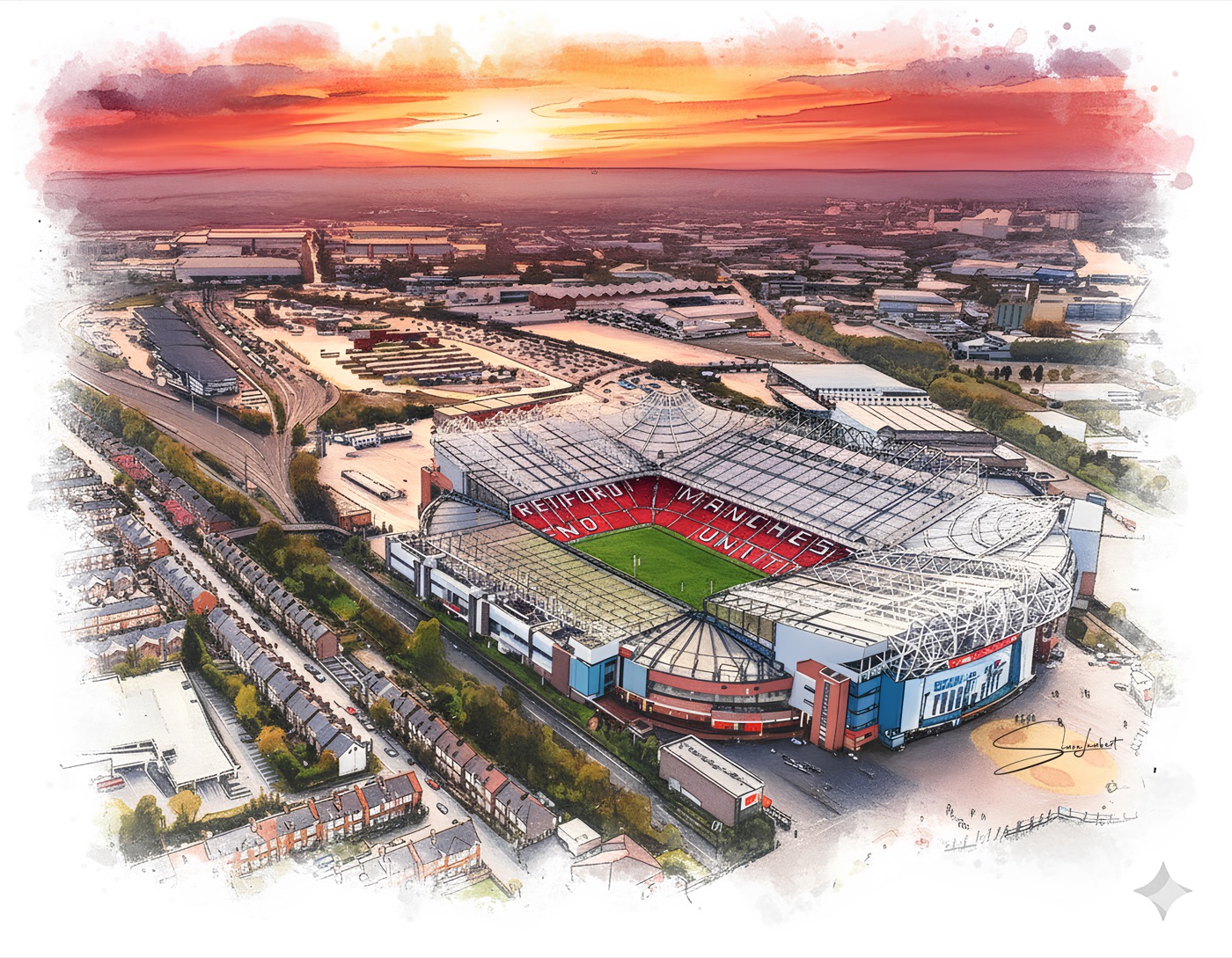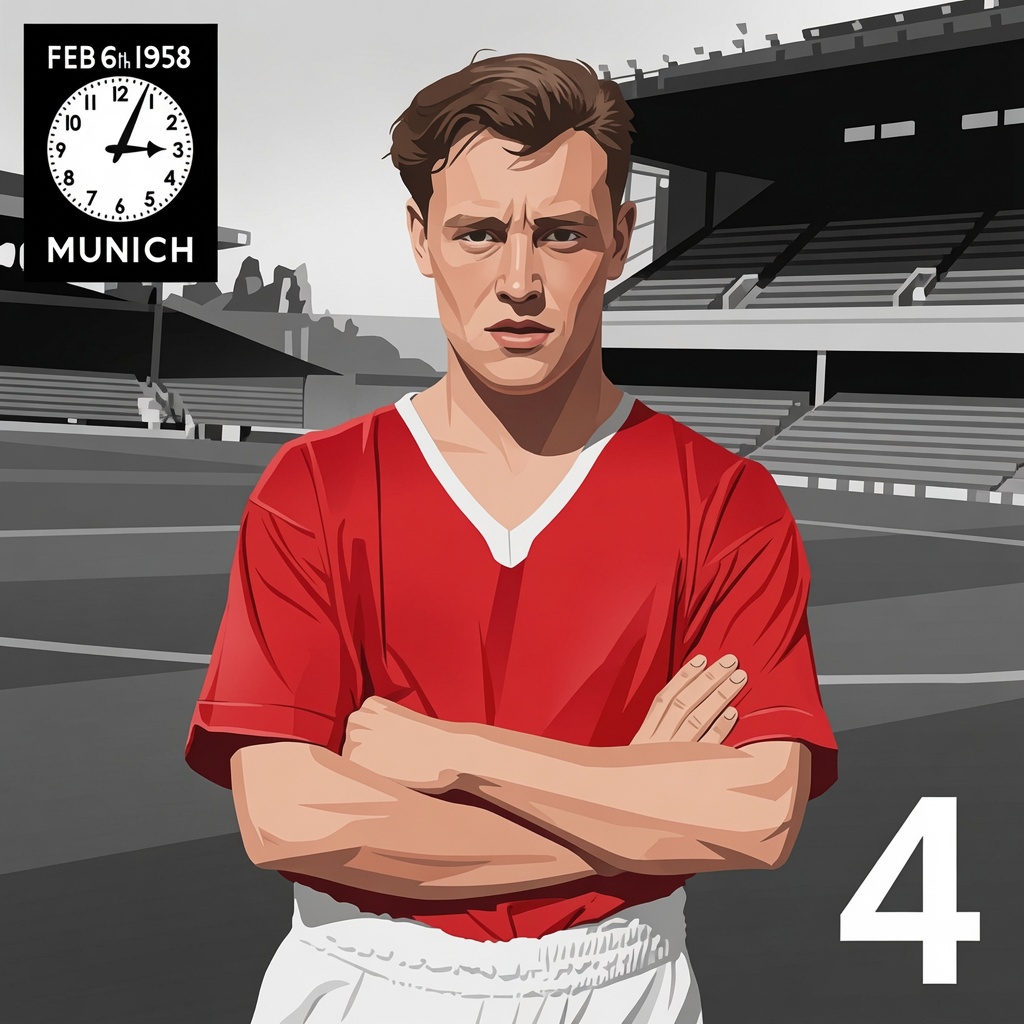
People ask about the name. Red 4 Digital is named after Eddie Colman. He played for Manchester United in the number 4 shirt and he was a cousin of Simon's mother. He died at Munich in February 1958 at the age of 21. This is his story and the story of the crash that took him, told as accurately as we can tell it.
A Salford lad
Edward Colman was born on 1 November 1936 at 9 Archie Street in Ordsall, Salford. He was the only child of Dick and Elizabeth Colman. Archie Street was a terrace of small houses close to the docks. A few years after Eddie's death it became the street the opening titles of Coronation Street were modelled on. The houses came down in the early 1970s.
He went to school in Ordsall and played for Salford Schoolboys and for Lancashire. Like a great many boys from those streets he spent his spare time at the lads club around the corner.
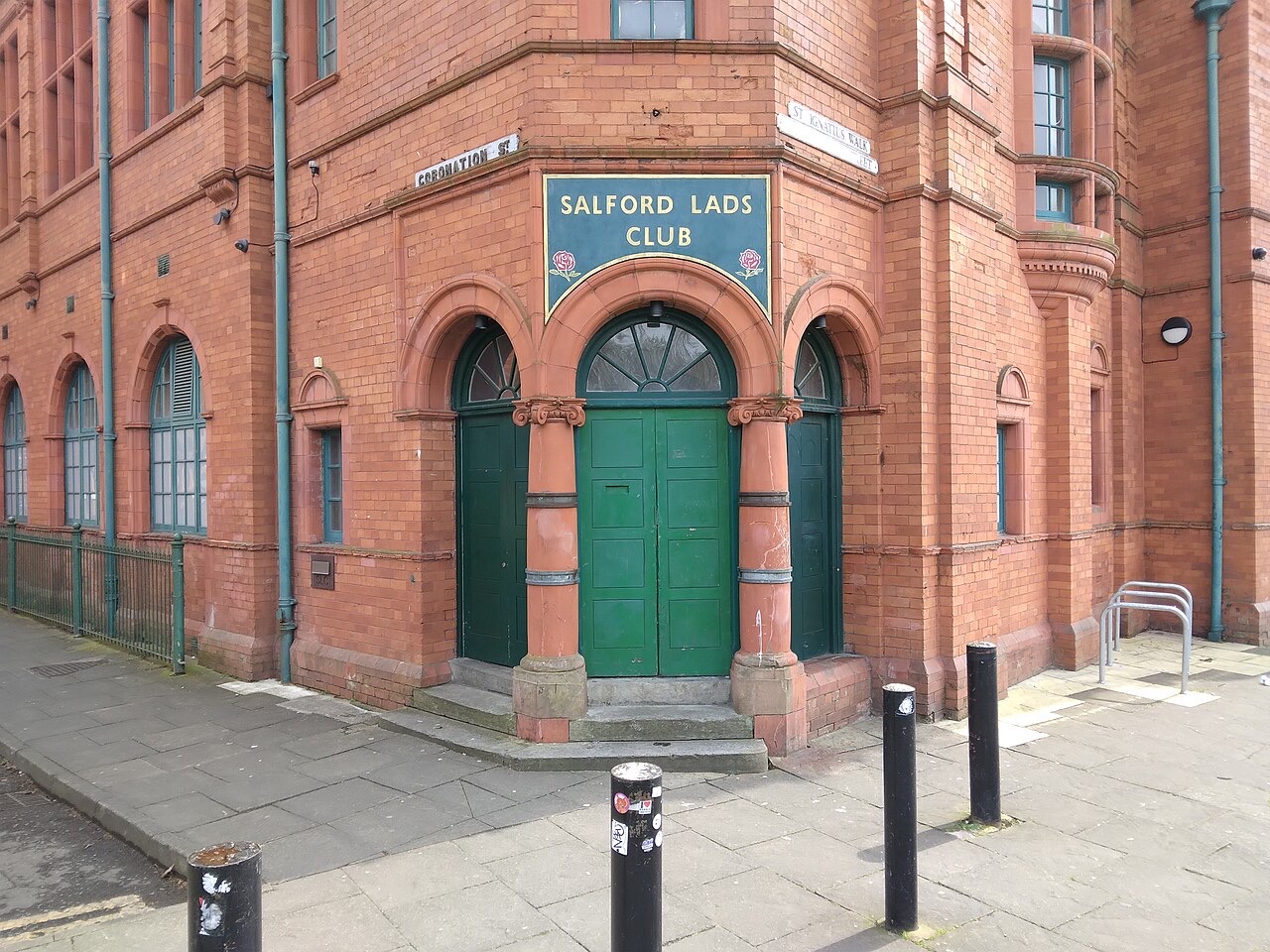
Salford Lads Club
The club was founded in 1903 by two brewery-owning brothers, James and William Groves. It was opened officially on 30 January 1904 by Robert Baden-Powell. The idea was simple: give the boys of Ordsall somewhere to go and something to do.
It is still open, now as Salford Lads and Girls Club, still run for young people in the same building. The building is listed and in June 2026 Historic England raised it to Grade II*. Music fans know it from Stephen Wright's photograph of The Smiths standing outside, taken in 1985 for the inner sleeve of The Queen Is Dead. You can find out more and support the club at salfordladsclub.co.uk.
Joining United
Eddie joined Manchester United from school in the summer of 1952 at the age of 15. He signed as a professional at 17. He was part of the first generation of Matt Busby's youth policy, the young side the newspapers called the Busby Babes.
The FA Youth Cup began in 1952–53 and United won the first three. Eddie played in all three finals and wore the number 4 shirt in every leg. In 1955 he captained the side and scored four goals over the two legs of the final as United beat West Bromwich Albion 7–1 on aggregate. During his national service he also played for the Army side alongside Duncan Edwards.
Snakehips
His first-team debut came on 12 November 1955 at Burnden Park against Bolton Wanderers. United lost 3–1 in front of more than 38,000 people. He was 19 years old and he took the place of Jeff Whitefoot at right half, the position that wore the number 4. He kept it.
He was about five foot six and slight. What he had was balance. A drop of the shoulder and a sway of the hips would send an opponent the wrong way and the crowd gave him the nickname Snakehips for it. He was also a far harder tackler than his size suggested. Jimmy Murphy, Busby's assistant, said there was no better tackler in the game.
United won the league in 1955–56 and again in 1956–57 with one of the youngest sides English football had seen. In 1957 they reached the FA Cup final and lost 2–1 to Aston Villa. They also became the first English club to enter the European Cup and went as far as the semi-final, where they lost to Real Madrid.
Off the pitch he was a Salford teddy boy who loved rock and roll and dancing. He was the side's unofficial social secretary and was famously late for things. Team-mates remembered how easy he was to be around.
Belgrade
In the 1957–58 European Cup United reached the quarter-finals and drew Red Star Belgrade. In the first leg at Old Trafford on 14 January 1958 Eddie scored the second goal of his career and United won 2–1. The second leg was played in Belgrade on 5 February. It finished 3–3 and United were through to the semi-finals 5–4 on aggregate. It was the last match he played.
Munich, 6 February 1958
The team flew home on a chartered British European Airways aircraft, an Airspeed Ambassador registered G-ALZU and named Lord Burghley. It could not make the journey from Belgrade to Manchester without refuelling, so it was due to stop at Munich-Riem airport. The departure from Belgrade was delayed by an hour after Johnny Berry mislaid his passport.
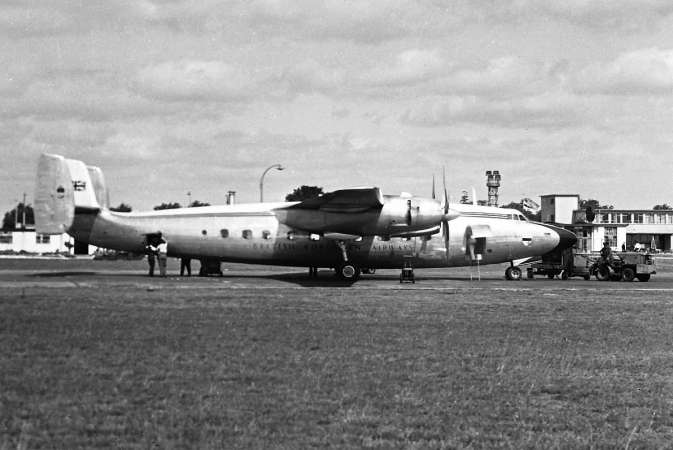
The aircraft landed at Munich in the early afternoon in falling snow and was refuelled. Captain James Thain was in command and his co-pilot Captain Kenneth Rayment was at the controls. Twice they began a take-off and twice they abandoned it because the engines were surging. On the third attempt the aircraft went into slush at the end of the runway and could not reach flying speed. It ran off the end, through the perimeter fence and across a road. It hit a house and then a hut containing a fuel lorry, which exploded.
It was just after three o'clock in the afternoon in England. Munich was an hour ahead. Of the 44 people on board 23 died. Eddie Colman was killed in the crash. He was the youngest of those who died.
Those who died
Eight players:
- Geoff Bent
- Roger Byrne, the captain
- Eddie Colman
- Duncan Edwards, who died in hospital on 21 February
- Mark Jones
- David Pegg
- Tommy Taylor
- Liam "Billy" Whelan
Three of the club's staff: Walter Crickmer, the club secretary; Tom Curry, the trainer; Bert Whalley, the chief coach.
Eight journalists: Alf Clarke, Donny Davies, George Follows, Tom Jackson, Archie Ledbrooke, Henry Rose, Eric Thompson and Frank Swift. Swift was the former England goalkeeper who had kept goal for Manchester City.
Also lost were Captain Kenneth Rayment, who died in hospital weeks later; the steward Tom Cable; the travel agent Bela Miklos; Willie Satinoff, a supporter and friend of Matt Busby.
Those who lived
The goalkeeper Harry Gregg climbed out of the wreckage and went back in. He pulled out Bobby Charlton and Dennis Viollet. He helped Jackie Blanchflower and Matt Busby. He also rescued Vera Lukić, the pregnant wife of a Yugoslav diplomat, along with her young daughter Vesna.
Busby was so badly hurt that he was given the last rites twice. He spent more than two months in hospital in Munich. He thought about never going back to football. His wife Jean told him the lads would have wanted him to carry on.
Johnny Berry and Jackie Blanchflower survived but never played again. Bill Foulkes, Kenny Morgans, Albert Scanlon, Ray Wood, Viollet, Gregg and Charlton all returned to the game.
Jimmy Murphy was not on the flight. He was the Wales manager as well as Busby's assistant and that night he was in Cardiff for a World Cup qualifier against Israel. He held the club together while Busby recovered.
The inquiries
The West German inquiry blamed ice on the wings and so blamed Captain Thain for taking off without making sure they were clear. A British inquiry in 1960 took a similar view. Thain spent more than ten years trying to clear his name. In 1969 a British review led by Edward Fay found that the cause was slush on the runway. It had slowed the aircraft until it could not take off. Thain was not to blame. He died in 1975.
Coming home
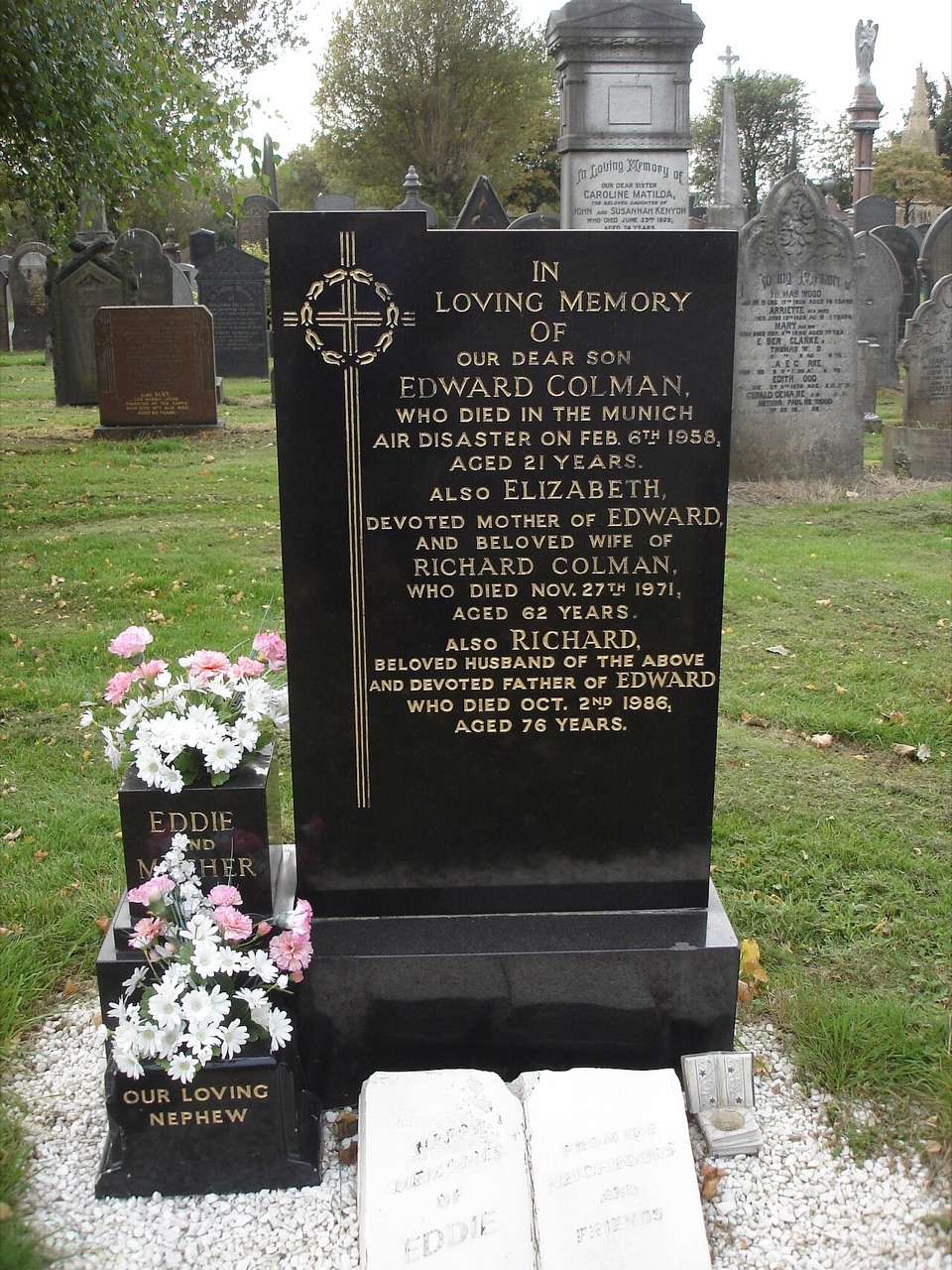
Eddie's funeral was held at St Clement's Church in Ordsall, near his home. He was buried at Weaste Cemetery in Salford. A group of workers at a Salford box factory took half an hour off to watch the funeral pass and were sacked for it. They were given their jobs back the following week.
His name lives on in Salford and Manchester. A student hall of residence in Salford was named Eddie Colman Court. In Newton Heath, where United began, Eddie Colman Close is one of a group of streets named after the players who died.
What came after
Less than a fortnight after the crash United played Sheffield Wednesday in the FA Cup at Old Trafford. The programme printed the United team sheet blank because nobody knew who would play. A side of reserves, youth players and two hurried signings won 3–0. Carried by a wave of public feeling, that team reached the FA Cup final in May and lost 2–0 to Bolton.
Ten years later, on 29 May 1968, Manchester United beat Benfica 4–1 at Wembley to become the first English club to win the European Cup. Matt Busby was the manager. Two of the team had survived Munich: Bill Foulkes and Bobby Charlton, who scored twice.
How it is remembered
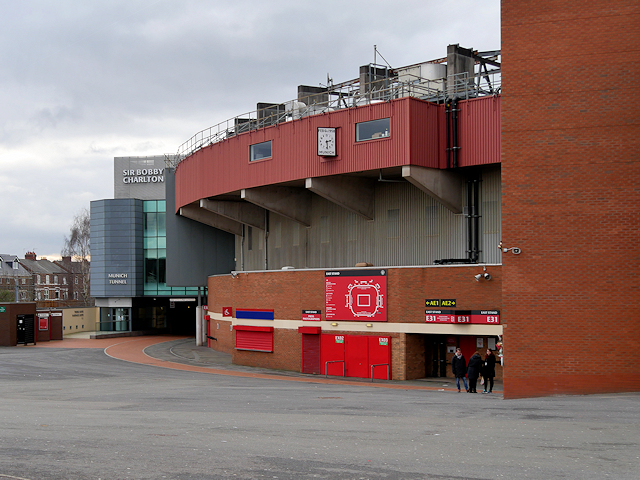
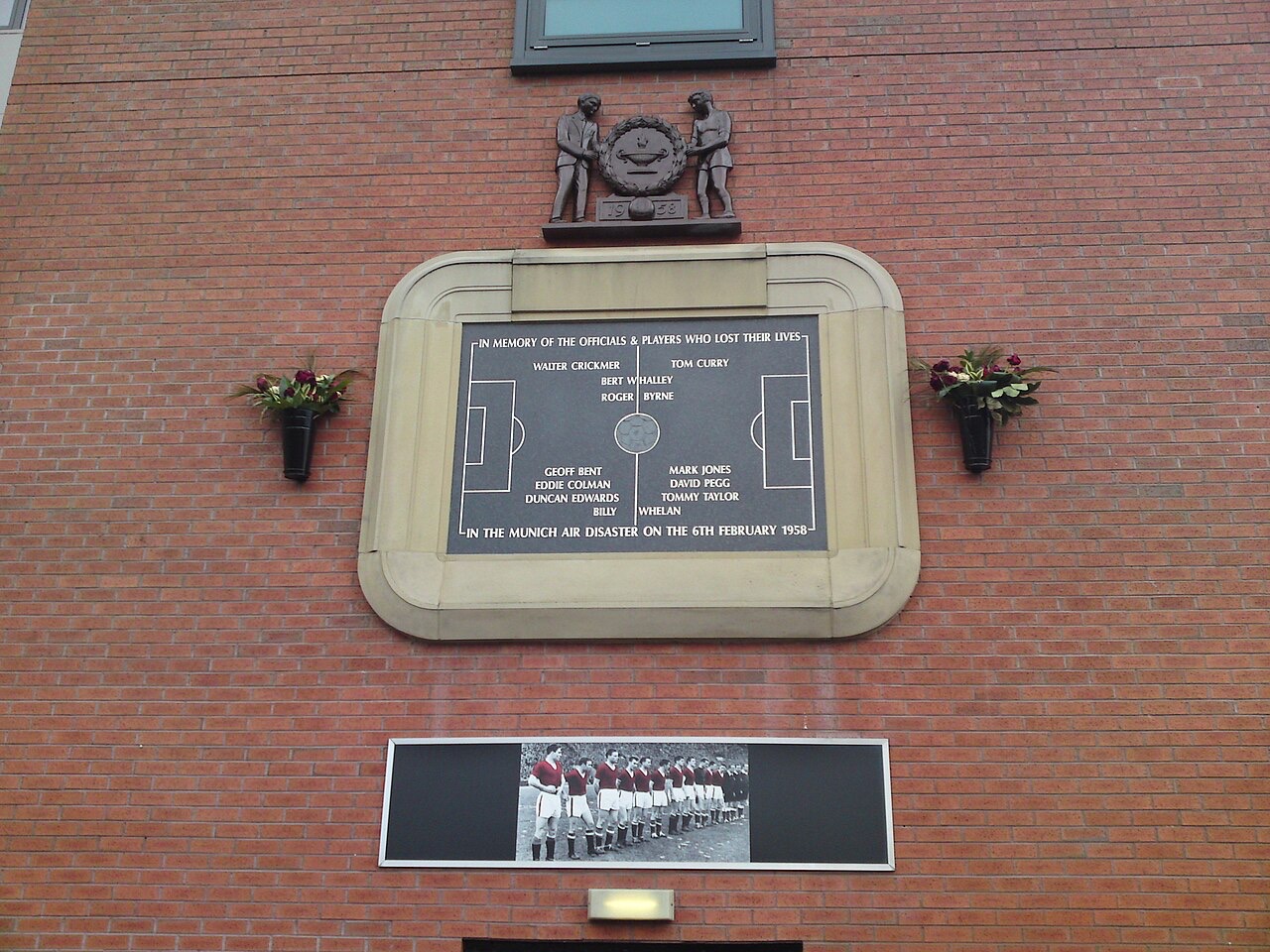
On 25 February 1960 three memorials were unveiled at Old Trafford: a plaque bearing the names of the players and staff who died, a plaque for the journalists and a clock. The clock is on the south-east corner of the ground. Its two faces read "Feb 6th 1958" above the hands and "Munich" below. Every anniversary the club pauses at 3.04pm, the time of the crash in England. In 2008, fifty years on, the tunnel under the South Stand was named the Munich Tunnel.
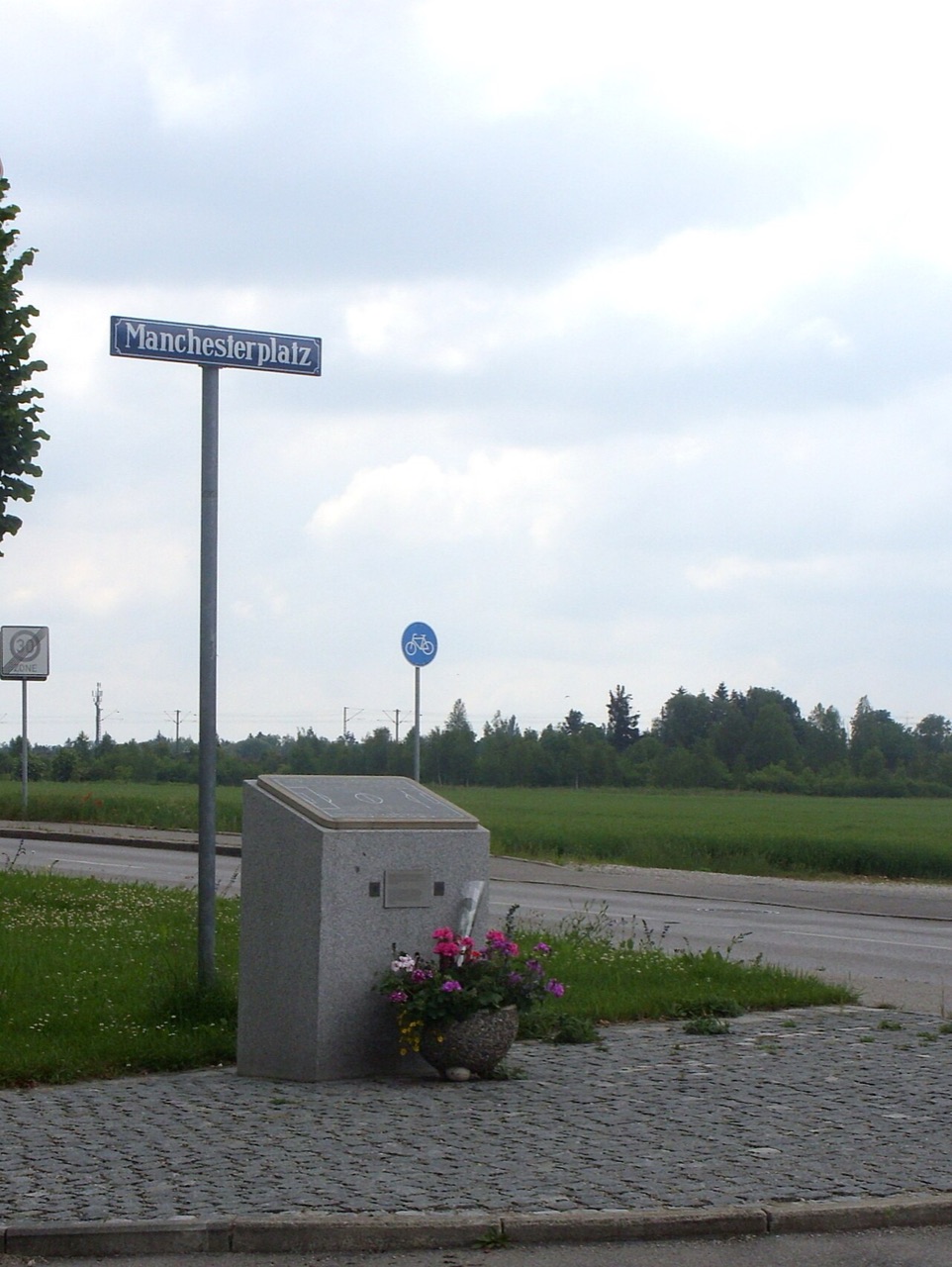
Munich remembers too. Close to where the old runway ended, in the district of Trudering, a granite memorial in the shape of a football pitch was unveiled in 2004. In April 2008 the city named the spot Manchesterplatz. The inscription reads, in English and German, in memory of all those who lost their lives there.
Why it is our name
Eddie was family: a cousin of Simon's mother. Red is for United. The 4 is the shirt he wore, from the Youth Cup finals to Belgrade.
The name is a tribute and it is also a reminder. Eddie had a few years at the top of the game and he made them count. The people who rebuilt the club after Munich did it with whoever was left and whatever was to hand. We think about both when we start something new. The past is worth reflecting on when you move forward.